For 55-year-old Elmiyo Ali Guled, life changed forever when conflict forced her to flee her home in Haji Canshuur Village, located approximately 18 kilometers south of Jalalaqsi in Somalia’s Hiran Region. Before displacement, Elmiyo lived a modest life with her family in their rural community. However, in 2021, armed clashes between Al-Shabaab and local clan militias escalated in the area, creating widespread insecurity and forcing thousands of families to flee in search of safety.
Among them was Elmiyo.
“When the fighting reached our area, we had no choice but to leave everything behind,” she recalls. “We fled with nothing except our children and the hope of finding safety.” The journey to Bulsho Internally Displaced Persons (IDP) Camp was long and exhausting. Accompanied by eight children five of her own and three grandchildren—Elmiyo walked for nearly five hours through difficult terrain. Along the way, they endured hunger, thirst, fatigue, and constant fear as violence continued around them.
Upon reaching Bulsho Camp, the family found temporary safety but faced a new set of challenges. For the past three years, the camp has been their home. Yet daily life remains a struggle, marked by limited access to food, healthcare, education, and adequate shelter. Humanitarian assistance has been sporadic. According to Elmiyo, it had been over a year since the family received any meaningful support. As resources dwindled, survival became increasingly difficult.
Their situation worsened when severe flooding associated with the El Niño weather phenomenon struck the area in late 2023. Floodwaters forced the family to evacuate Bulsho Camp and seek refuge on higher ground for two months, from November to December. “When the floods came, we had to leave the camp once again,” Elmiyo explains. “We stayed
outside the camp for two months with very little support and many uncertainties about the future.”
When the family returned to the camp in January 2024, their hopes of receiving assistance were fading. Food supplies were exhausted, living conditions had deteriorated, and opportunities to earn income remained scarce.
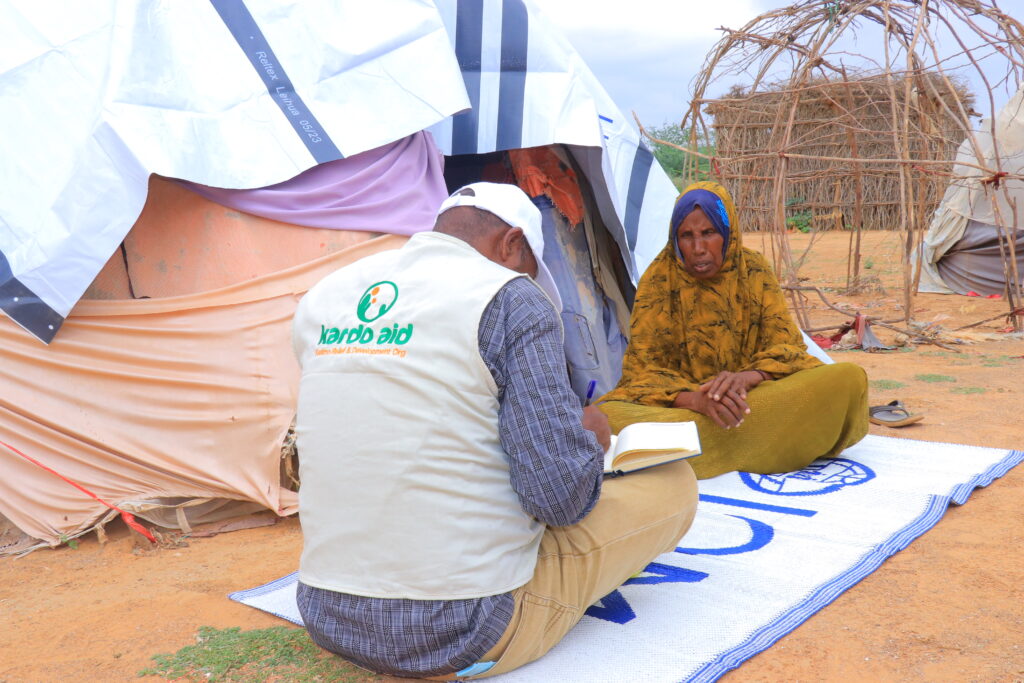
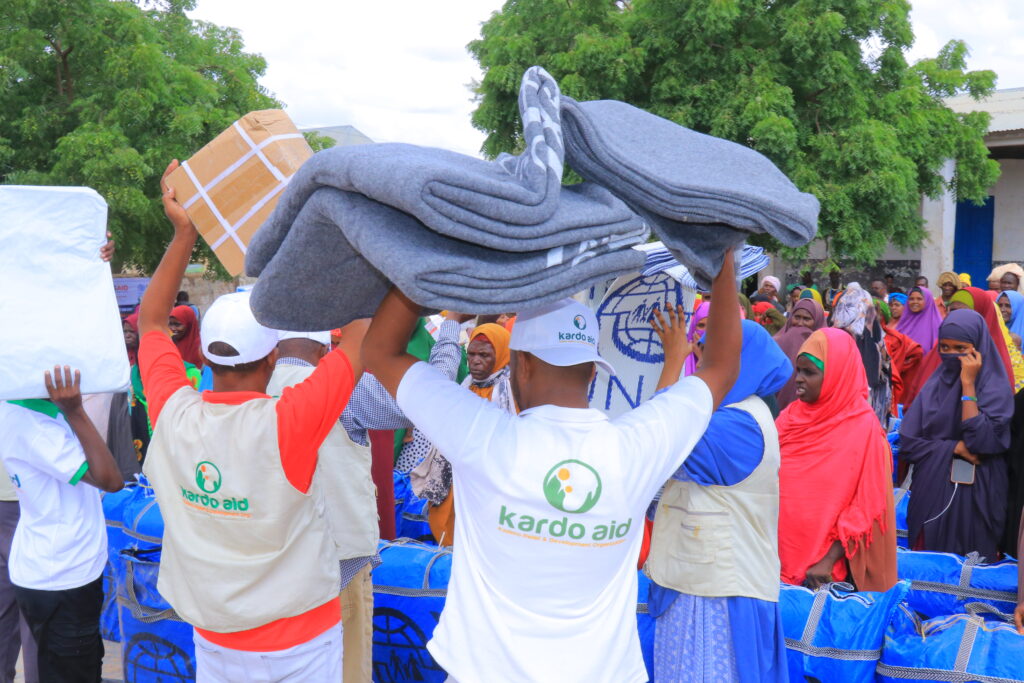
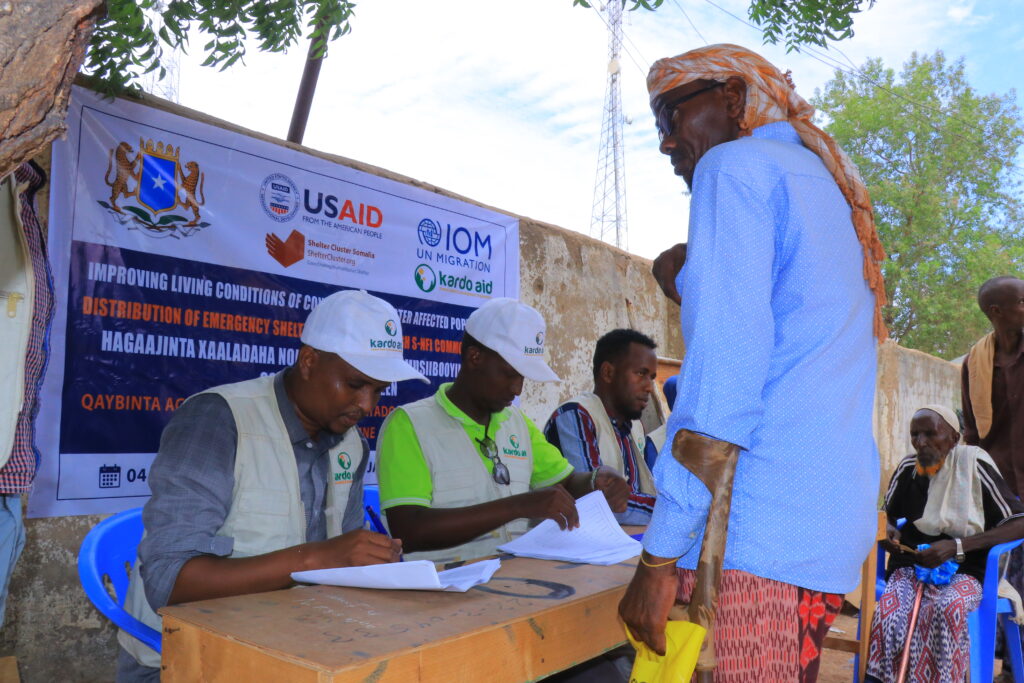
At this critical moment, KARDO AID, in partnership with IOM Somalia, reached the family with life-saving humanitarian assistance. The support arrived just before the onset of the rainy season, providing much-needed relief during a period of heightened vulnerability. The assistance helped address the family’s immediate needs and offered a renewed sense of hope after months of hardship and uncertainty.
Today, Elmiyo continues to care for her family under difficult circumstances. While she was once responsible for eight children, only four now remain under her direct care. Her eldest son tries to support the household through occasional casual labor opportunities, but employment is unpredictable, and many days he returns home without finding work.
“Some days my eldest son finds small jobs and earns enough to help us,” she says. “Other days he comes home empty-handed. We continue to struggle, but the assistance we received reminded us that we have not been forgotten.”
Elmiyo’s story reflects the realities faced by thousands of displaced families across Somalia who continue to endure the combined impacts of conflict, displacement, climate shocks, and economic hardship. Despite these challenges, her determination to protect and provide for her family remains unwavering. The support provided through humanitarian interventions not only addresses immediate needs but also restores dignity, strengthens resilience, and offers hope to families striving to rebuild their lives.
For Elmiyo and her children, that support arrived when it was needed most—serving as a
reminder that even in the face of profound adversity, hope can endure.